Miscarriage as a Feminist Issue:
A Conversation Between Cheryl Furjanic and
Victoria Browne
CHERYL FURJANIC AND VICTORIA BROWNE
What does it mean to grapple with the trauma and grief of miscarriage and to process it through/as art? How does one visually depict miscarriage for an audience without diminishing the many emotions left in its wake, especially in light of knowledge that no two miscarriage stories are the same? And what does it mean to deliberately politicize miscarriage, given that it’s a matter already embroiled in politics, economics, and inequality? Barely one decade ago miscarriage was a topic rarely discussed publicly in the United States and United Kingdom. With the current attacks on reproductive justice in post-Roe U.S., a nervousness has set in among feminists about the best ways to talk about reproductive loss without inadvertently strengthening the anti-abortion cause. Touching on this tension in the conversation that follows, Emmy-nominated filmmaker, Cheryl Furjanic, speaks with feminist theorist, Dr. Victoria Browne, about her process of making a film about her own miscarriage as a queer woman.
VICTORIA BROWNE: It’s great to speak with you again, Cheryl. Rewatching the trailer for Adventures in Miscarriage, I was struck by how refreshingly irreverent your approach to the subject is. I’ve been researching miscarriage for over 10 years now, and when I started, it was still very taboo—there was lots of silence around it. And I’d say that’s changed quite significantly, at least in the U.K. where I'm based. Today there are lots more public discussions, well-known public figures disclosing experiences of miscarriage, national newspapers talking about it, and TV shows. But what stood out about your work was that it had a different tone. The usual representations can be quite sanitized, so your use of humor and willingness to go into the darker sides of it is really different. There's often acknowledgment of grief and loss, but it’s presented in ways that kind of domesticate or soften it. And your work doesn’t do that.
CHERYL FURJANIC: That’s interesting. I’ve been thinking lately about how humor is my love language. I know that I struggle to express anger. Early in the process, my producer, Stephanie Schiavenato, noticed that I had a hard time showing sadness too. So I wonder if in some ways, humor became a way to express something honestly but still feel safe, to express myself without getting into the depths and darkness of the grief, and also the scary parts of the anger and feeling like, “well, if I do this this way, I can still say what I want to say without endangering myself.” Or something like that. Which is actually quite a new way of thinking about the project for me. The humor comes very easily to me, the ways to point out what’s ridiculous and absurd, and making things palatable, accessible, entertaining, or whatever. Because how do you get someone to want to watch a miscarriage documentary? Well, you’ve got to make people laugh. But what I think I'm actually focusing on more now is how do I also acknowledge and honor the deep, deep sadness?
VB: I remember in one of our earlier conversations, you mentioned how grief is often represented through pastel tones and very gentle language, a soft kind of imaginary. But you described your own experience of grief as quite wild and full of anger and intensity. That really stayed with me.
CF: Yes, exactly. When I made a film about the Stonewall National Monument, I remember people referring to the LGBTQ+ “community,” singular. But it’s not one homogenous group. And I feel the same way about people who’ve experienced miscarriage. I sometimes joke that we’re all part of this “club,” and I think that resonates with a lot of people, but it’s really a collection of many clubs. There’s this saying, “If you’ve heard one miscarriage story, you’ve heard one miscarriage story,” because everyone's experience is so different. I'm pretty sure that we've all had terrible experiences with whatever medical practitioners we've interacted with—we have that in common. But it does feel like there is no one-size-fits-all, or singular flavor, for reproductive loss grief.
And yet it’s often packaged that way. I like that you called it a “soft imaginary.” I think that’s what I'm pushing against. Even if I have feelings of sadness, it comes out differently for me. The flowing curtains and pastel colors and yoga are lovely for some people in the way that they want to process their grief, but it doesn’t speak to me.
“There’s this saying, ‘If you’ve heard one miscarriage story, you’ve heard one miscarriage story,’ because everyone's experience is so different.”
VB: Yeah, there are definitely people that works for, but for other people, it just doesn’t resonate, which can be really alienating. In the U.K., and I think in the U.S. too, miscarriage is increasingly framed as pregnancy loss, baby loss, bereavement—which is appropriate for some. But for others, miscarriage might not be a very significant life event. Or it might be something that they feel relief about. There are lots of feelings that can come with it.
But when people encounter this framing of miscarriage as the loss of a baby that you're going to feel devastated about, if they don't feel that way, then they can think, “Is there something wrong with me? Maybe I'm not normal or maybe I'm some kind of terrible, monstrous person who isn't having the appropriate response.” So I think it's really important that, as we do start to talk about miscarriage more, we recognize that diversity and complexity.
CF: I love that. No one can do reproductive loss “wrong.” But for people who are queer, or who have dark humor, or who feel relief, or who are just processing in a different way, it can feel like there isn’t a place, or there are very few places, to explore or express that.
VB: I think that's right. And it would be interesting to hear more about your experience as a queer person going through this and navigating the heteronormativity of lots of the mainstream discourse around reproductive loss.
CF: Yeah, that’s a big one. It’s funny, I love team sports. I played soccer. I think of filmmaking as a team sport. But grieving didn’t feel like a team sport for me. I didn’t seek out group experiences. I wasn’t looking for community in that way. I was sort of stumbling along clumsily through my own sadness. But I ended up finding community with friends who I knew had experienced reproductive loss. And in the years before when they had mentioned their miscarriages to me, I'm sure I didn't say the right things, just like people didn't say the right things to me or said things that might have been insensitive. But luckily, they were willing to take my calls and I could speak their language in a different way by then.
It made me realize how important it is that people are willing to speak openly. I’ve seen miscarriage documentaries where they never once mention anything but straight people, so I can see the lack of queer representation. But it's not that I don't feel welcomed necessarily or see myself in these groups because I'm queer. It’s just that I needed something different.
VB: I’m also thinking a lot about how to navigate these spaces as a feminist. In feminist philosophy, for example, very little has been written about miscarriage or stillbirth. We discuss pregnancy, birth, maternity, and abortion a lot—but not really miscarriage. And I think that’s because of a kind of nervousness that feminists might have around talking about it, because if you acknowledge miscarriage, you need to acknowledge that lots of people (though not all) do have a grief response. And there's a fear that if we acknowledge this, we’re inadvertently strengthening the anti-abortion cause.
So there's been a tendency to avoid the subject. But I think that’s starting to change, as feminists start to realize that people do need frameworks and communities and if feminists don’t offer them, the anti-abortion movement are very happy to step in. And there’s also a growing understanding of how the politics of reproduction impacts experiences of miscarriage in terms of what kind of care is available. Like in the U.S., there’s now much more awareness of how the criminalization of abortion impacts all kinds of pregnancies and pregnancy endings. People who have had miscarriages or stillbirths have been criminally investigated. It’s happened in the U.K. too, though to a much lesser extent.
“In feminist philosophy, for example, very little has been written about miscarriage or stillbirth. […] And I think that’s because of a kind of nervousness that feminists might have around talking about it, because if you acknowledge miscarriage, you need to acknowledge that lots of people (though not all) do have a grief response. And there's a fear that if we acknowledge this, we’re inadvertently strengthening the anti-abortion cause.”
Actually, just a few weeks ago in the U.K., there was a vote in Parliament on partially decriminalizing abortion. I won't go through the whole mechanics of it, but basically the outcome is that now, a person can't be criminally investigated for ending their own pregnancy outside the existing law. Other people who might facilitate the ending of a pregnancy outside the law can still be investigated and prosecuted. But the pregnant person themselves now won't be held criminally liable, which is a good thing—though by no means full decriminalization, so we have to keep fighting for that.
How about the situation in the U.S.? Does it feel bleak?
CF: That feels like a pretty good definition of it at the moment. When I had my miscarriage over 10 years ago, it felt like medical institutions and people who practice medicine weren't trained to do any kind of social-emotional work around complications of pregnancy. But in some ways—and this feels strange to say—I feel lucky that my miscarriage happened when it did. I was traumatized and terrified, but on top of that I wasn’t afraid I’d be arrested.
Now I think, "If it was this bad then, what must it be like now?"
VB: That makes complete sense. In line with modern progress narratives, we’d expect someone to say, “If I had to choose a period of time in which to have my miscarriage, it would be today rather than a decade ago.” Whereas in your case you're saying the reverse. So there’s an interesting kind of temporality going on there.
And, of course, some people are much more likely to be investigated or criminalized than others. As we’ve seen in the U.S. and U.K., it's often low-income women, women of color, or migrants who are targeted. It's the same patterns that reflect deep social inequality and structural racism.
CF: Exactly. It’s like these laws and restrictions are written to punish certain groups, even if they claim to be neutral. It’s targeting without targeting.
VB: Yes, and I think that’s why we need a feminist analysis that takes these structural inequalities into account. Miscarriage is usually treated in this very apolitical kind of way—as a personal problem that we deal with through therapeutic work and so on. And obviously that's an important part of it. But it ignores the wider picture, where people who are exposed to unsafe housing conditions and toxic air and water are more likely to experience miscarriage.
So in my own work, I’ve tried to deliberately politicize miscarriage because it’s already embroiled in politics, economics, and inequality. I think we have to consider it in political and structural terms, while at the same time trying to understand that it’s also a deeply personal experience that people go through in different ways.
And that’s something I think you’re trying to do in your film, isn’t it? Especially as you're looking at miscarriage in the post-Roe landscape. Last time we spoke, you were still figuring out how to approach that. I wonder if you've come any further?
CF: It’s interesting. It feels like we’ve shot about half the film at this point, and I’m working it through. I love how you described the pressures, internal and external, almost like they’re exerting force on an object or a person. There’s the internal experience—grief, relief, everything in between—and then the societal, environmental, and economic pressures that are pushing on you, that might have helped cause the miscarriage or your reaction to it.
And then there’s all the different people involved. We had a public event and fundraiser in December, and one of the things that was interesting was the number of men who came up afterwards. They were really moved by the piece and talked about direct experiences from their mothers or sisters or friends or partners. I'm thinking now about partners of the gestational parent in a way I wasn’t before—the whole ecosystem of people who are affected or touched by this topic.
What I’m trying to do now is include the making of the film within the film. I wasn’t doing that at the beginning. But that process feels like a way into these bigger issues. Almost like, “I’m a filmmaker making a documentary about miscarriage—here’s what you should know,” and then start to insert my own experience and let it break me open a bit as the filmmaker. It all gets too heavy to hold, and that’s what allows me to open up in a different way.
In your case, have you also gone through shifts like this? Has there been any interesting pushback or surprises?
VB: It’s a very good question! Actually, I had an interesting experience just this past Monday. I was presenting at a workshop at the University of York on “non-reproduction,” which mostly centered on people who don’t have children, often involuntarily. Various people talked about miscarriage, but also fertility struggles and infertility and living a life without children, and how to navigate the social expectations around that, and so on.
I talked about some of my own work, and the discussion afterward really made me think about how ambiguous our understanding of miscarriage is. Several people there had undergone IVF (in vitro fertilization), where embryo transfers hadn’t led to a pregnancy. Technically, it doesn’t “count” as a miscarriage—there’s no implanted embryo or fetus—but the loss can be very real. And that made me think about how my own project has been rooted so much in pregnant embodiment. But there are so many different kinds of reproductive loss that don’t involve an actual experience of pregnancy.
“…there are so many different kinds of reproductive loss that don’t involve an actual experience of pregnancy. [...] For example, in surrogacy arrangements, when a miscarriage happens, the intended parents also experience that. It’s not embodied in the same way, but the loss may be there.”
One thing we discussed at the workshop was expanding the definition of miscarriage or pregnancy loss. For example, in surrogacy arrangements, when a miscarriage happens, the intended parents also experience that. It’s not embodied in the same way, but the loss may be there.
So yes, I’ve found that different communities respond differently to my work. I haven’t experienced much pushback, probably because the circles I move in are generally receptive to these kinds of ideas. But what has surprised me is how warmly people are welcoming the effort to talk about miscarriage and abortion in relation to one another. There’s a strong sense that these subjects have been separated or siloed.
CF: Right, we were talking about that earlier—the feminist nervousness around miscarriage.
VB: Exactly. And I think there’s a real appetite for an explicitly pro-abortion space where we can also talk about miscarriage. A lot of pregnancy loss support groups avoid discussing abortion, which can make feminists worry they might be entering a potentially anti-abortion space.
So there’s a real need to carve out a space that explicitly says: yes, we support and champion abortion rights and access, and once that principle is laid down—that we all agree people should of course be able to end pregnancies safely and freely and without stigma—then people can feel free to say what they need. I think there’s a freedom that comes in setting up those boundaries.
CF: I love that. I’ve always been pro-choice, but my miscarriage made me pro-abortion in a way I hadn’t been before. I can’t fully explain it, but something shifted.
VB: Interesting, can you unpack that?
“I’ve always been pro-choice, but my miscarriage made me pro-abortion in a way I hadn’t been before.”
CF: It came from deep within my loss experience. Maybe it’s because I tried for so long to get pregnant, and when it finally happened, I was so thrilled. Then it was taken from me. And it occurred to me that someone else might also feel thrilled about being pregnant but then realize it’s not the right time or just not right for them, and that merits respect. Maybe it’s a hard decision for them, or maybe it’s easy, but it just felt like they need to be left alone, if an abortion is what they need to do.
VB: That makes sense. There’s so much connection and overlap between pregnancy-ending experiences—in terms of the physical embodied side of it, and also the medication and techniques that are used to complete miscarriage are the same as those that are used to induce abortion.
But even though there are all these connections and crossovers, we’re often taught to see them as completely different, if not oppositional. There’s this assumption that miscarriage is the involuntary loss of a wanted pregnancy, and abortion is the chosen end of an unwanted one. But the reality is much blurrier. Sometimes miscarriage ends an unwanted pregnancy. Sometimes abortion ends a very much wanted one. These aren’t neat categories. And what I hope is that we can find solidarity in these kinds of connections and blurred lines.
CF: Yes, it’s almost like there are all these “clubs”: miscarriage club, pregnancy club, mom club, abortion club. But a lot of us move between them over our lifetimes. These aren’t isolated experiences for many people.
“There’s this assumption that miscarriage is the involuntary loss of a wanted pregnancy, and abortion is the chosen end of an unwanted one. But the reality is much blurrier. Sometimes miscarriage ends an unwanted pregnancy. Sometimes abortion ends a very much wanted one. These aren’t neat categories. And what I hope is that we can find solidarity in these kinds of connections and blurred lines.”
VB: I think often people have an assumption that when you get pregnant and have a baby, you're going to become less pro-choice, or that if you have a miscarriage, then you're going to instinctively turn against somebody who's terminated their pregnancy when you lost a pregnancy you really wanted. And people do have those kinds of feelings—of course they do, and they’re exacerbated by a patriarchal society that tries to pit us against each other. But I also think people quite commonly have that sense of connection and increased understanding or empathy you talk about.
So it seems to me a really important feminist imperative to try and explore those connections and build that solidarity. That doesn’t mean losing all sense of specificity, and people should be able to withdraw when they need to and say, “I can't actually be part of this right now.” But I think feminist theory and activism have always grappled with that kind of tension: how to build broad coalitions without flattening or erasing differences. We’ve got the tools we need to do this kind of feminist work.
CF: That makes a lot of sense and I really appreciate what you said about feminist tools. Because I do feel like with the film, I’m learning as I go—not just about grief, but about how to tell a story that holds all of that complexity. It’s like there’s a part of me that’s still figuring out how to turn the gray areas and in-between spaces and feelings into a film scene, while also protecting myself. And at the same time, I’m realizing I want the film to show the messiness of that process: the process of making art from grief.
VB: And different media have different modes of expression, don’t they? In philosophy, there’s often a drive to define and categorize everything, to answer, “What is a miscarriage? What is lost?” And those questions are really worth pursuing. But we also have to resist the urge to settle the questions. I think we need to keep exploring them. And it sounds like that's what you're trying to negotiate with the film. As you say, you're trying to bring in the process of constructing the film into the film itself. That sounds to me like a really good way of keeping things as open as possible and not trying to settle things and say, “This is my story, fixed, closed down.”
CF: Yes. I thought I had settled on a version of myself—a character in the film that made sense. She’s a filmmaker, a feminist, a queer person, and someone who uses humor. And then somehow it started to eat at me and fall apart. And that's the part I'm so interested in and hopefully will come across in the film—what it's like to make art about trauma and grief.
VB: Grief isn’t linear, is it? You don’t just process it in stages and then “move on.”
CF: Exactly. In the early versions of the film. I was trying to make it tidy and safe and palatable—for the audience and for myself. And I think the more I did that, the more it wanted to come out in other ways. And then one day on set about a year ago, it did. I just started crying and I couldn't stop crying when I was doing a recreation scene that was very much like my miscarriage. It needed to get out. There was this big release I had on camera while we were shooting on set with the crew full of people, and I just couldn't stop crying. And it's going to be in the film because it feels like a very important, pivotal part of my processing, my grief, but also the process of making this film. I thought I was making one film, but I'm maybe making a different film, or something else is coming out.
VB: And that’s such a generous thing—to share and let that be part of what’s made.
This conversation took place via Zoom on Friday, September 5, 2025. It has been edited for length and clarity. Adventures in Miscarriage is currently in production and expected to be released in 2027. Excerpts from the film will be screened at the Feminist Miscarriage Project Conference in London in June 2026. You can learn more about Adventures in Miscarriage at Cheryl’s website. To make a tax-deductible contribution to support the making of the film, please visit: https://www.documentaries.org/films/adventures-in-miscarriage/.
ABOUT THE GUESTS
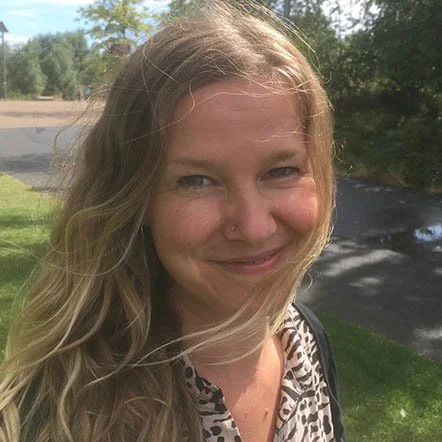
VICTORIA BROWNE is a Senior Lecturer in Political Philosophy at Loughborough University in the U.K. She is the author of Pregnancy Without Birth: A Feminist Philosophy of Miscarriage (Bloomsbury, 2022) and Project Lead for the Feminist Miscarriage Project (funded by the UK Arts and Humanities Research Council). She is also Co-Editor-in-Chief of the feminist philosophy journal Hypatia and a longstanding member of the Radical Philosophy editorial collective.
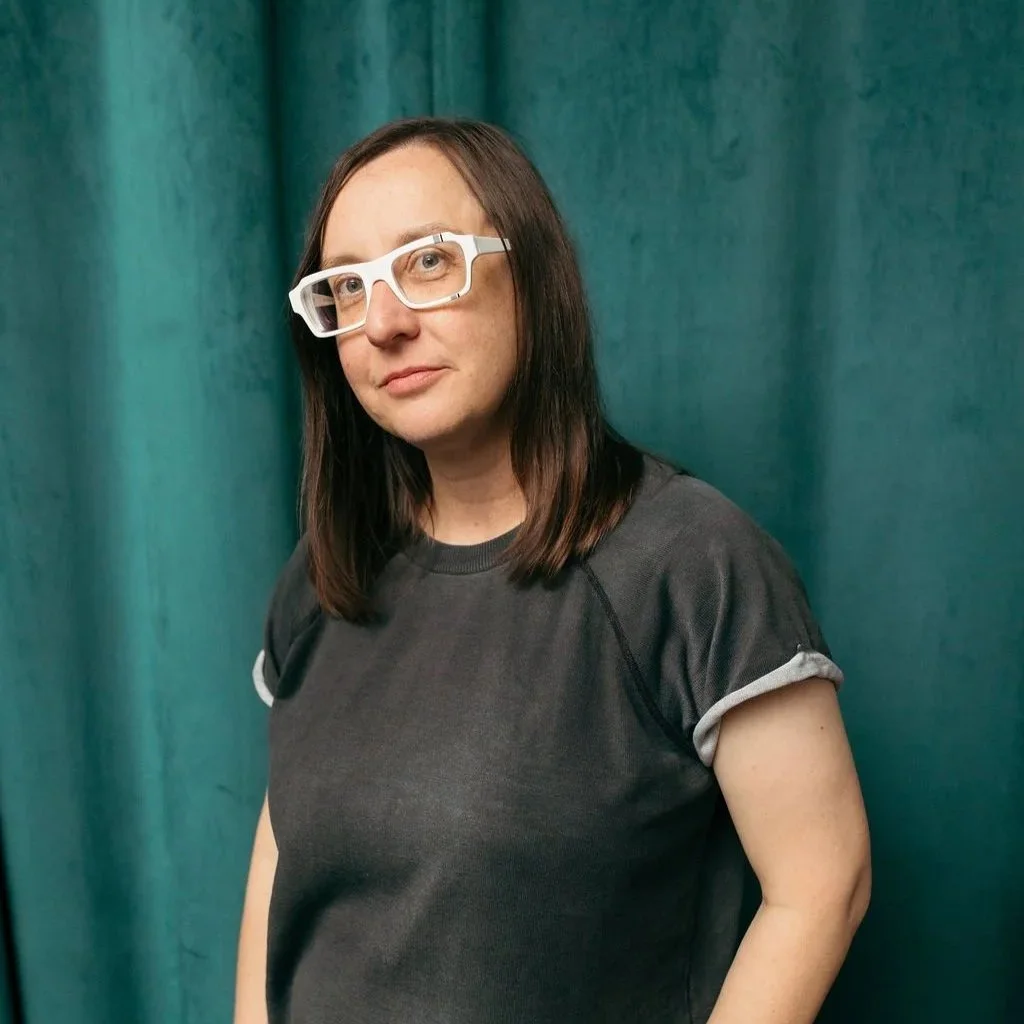
CHERYL FURJANIC is an Emmy-nominated filmmaker whose documentary and fiction films have screened at 170+ festivals worldwide and on television. Her most recent work is Stonewall: The Making of a Monument (New York Times Op-Docs, 2019). Her feature documentary Back on Board: Greg Louganis was broadcast on HBO and nominated for an Emmy Award in 2016. She is currently in production on her third feature-length documentary, Adventures in Miscarriage. Though she’s worked in many different filmmaking genres, there is a through-line in all of her work of heart, humor, and hope in the face of uncertainty. Furjanic has taught documentary production at New York University for 25 years.
MORE FEMINIST FUTURES